
Metabolic Research
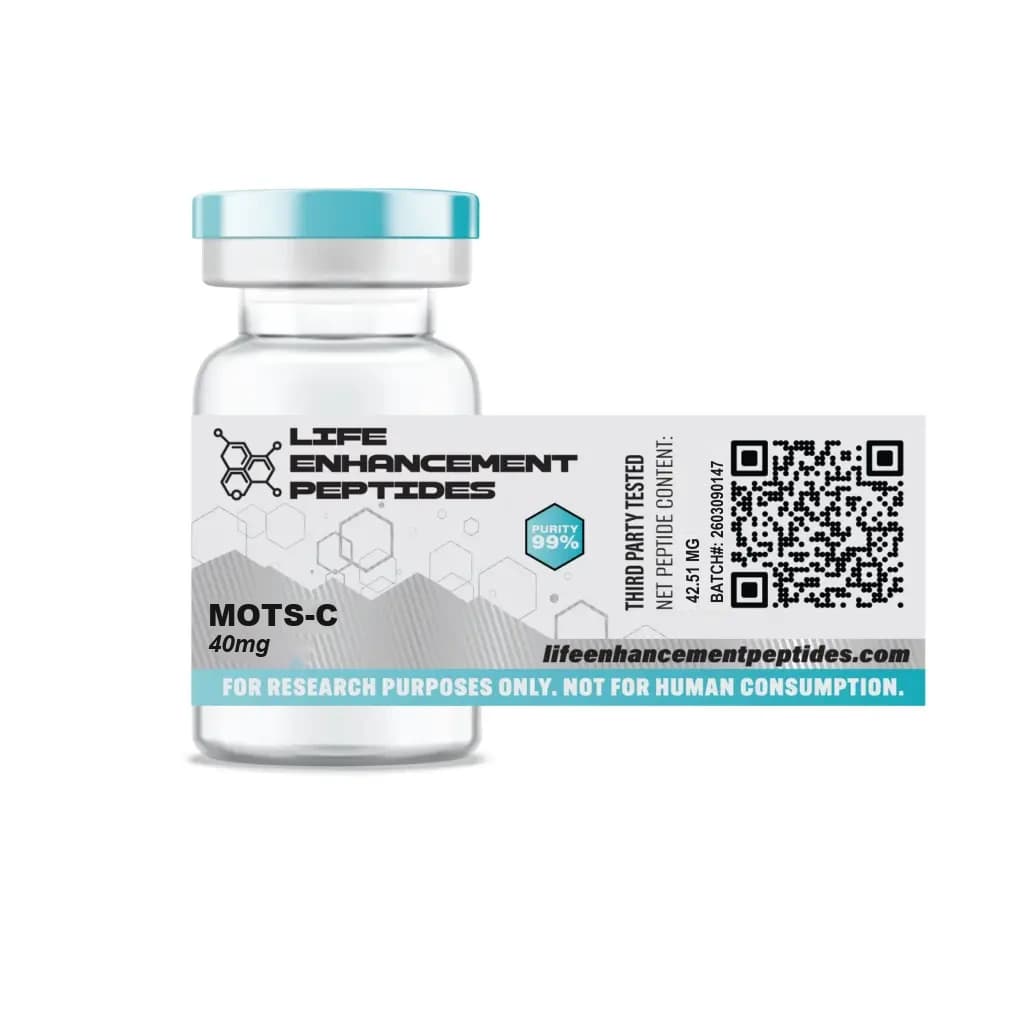
MOTS-c — 40mg
$105
A mitochondria-encoded 16-amino acid mitokine that signals through the Folate-AICAR-AMPK pathway, functioning as a candidate pharmaceutical exercise mimetic with strong evidence in insulin resistance and age-related metabolic decline.
 Metabolic Research
Overview
MOTS-c (Mitochondrial Open Reading Frame of the 12S rRNA-c) is a 16-amino acid peptide encoded within the mitochondrial genome — a discovery that fundamentally expanded understanding of mitochondrial biology beyond ATP production. As a mitokine, it is secreted by mitochondria in response to metabolic stress and acts as an intercellular signal coordinating metabolic adaptation. Its mitochondrial origin distinguishes it from all nuclear-encoded peptides and positions it at a unique intersection of evolutionary biology and metabolic medicine.
The peptide operates primarily through the Folate-AICAR-AMPK pathway: it inhibits the folate cycle under metabolic stress conditions, leading to AICAR accumulation and downstream AMPK activation. AMPK is the master energy sensor of the cell, and its activation recapitulates many of the molecular effects of sustained aerobic exercise — including mitochondrial biogenesis, fatty acid oxidation, and glucose uptake independent of insulin. Under cellular stress, MOTS-c also translocates to the nucleus where it binds antioxidant response elements (ARE) and activates Nrf2-dependent gene programs, coupling metabolic and oxidative stress responses.
Exercise physiology studies have shown an 11.9-fold induction of MOTS-c expression in skeletal muscle following acute exercise. In type 2 diabetic heart tissue models, it has been shown to restore mitochondrial respiratory chain function. These properties have made it a leading candidate among pharmaceutical exercise mimetics — compounds that could deliver metabolic benefits to populations unable to exercise adequately due to age, disability, or disease.
Mechanism of Action
Inhibits folate cycle to drive AICAR accumulation and AMPK activation; translocates to nucleus under metabolic stress to activate Nrf2/ARE antioxidant programs; restores mitochondrial respiratory chain function in metabolically compromised tissue.
Research Applications
Areas of peer-reviewed scientific inquiry where this compound has appeared.
- Exercise mimetic research
- Insulin resistance and type 2 diabetes
- Obesity and adipose metabolism
- Age-related metabolic decline
- Skeletal muscle homeostasis
- Cardiovascular metabolic research
Key Findings from the Literature
- 01Exercise induces 11.9-fold MOTS-c expression in skeletal muscle
- 02Restores mitochondrial respiration in type 2 diabetic heart tissue models
- 03Encoded within the mitochondrial genome — first mitochondrial-derived hormone
- 04AMPK activation recapitulates key molecular effects of sustained aerobic exercise
Certificates of Analysis1
Independent third-party lab reports for this peptide. Each CoA can be verified against its accession number at the testing lab.
1 independent test by Freedom Diagnostics Testing
| Test | Result |
|---|---|
| Purity (HPLC) | 99.870% |
| Identity (MS) | Pass |
| Endotoxins (LAL) | Pass |
Lab: Freedom Diagnostics Testing
Accession: 2603090147 / 2603090148
Reports are verifiable against the issuing lab using the accession or batch identifier above.
Related Peptides
Other compounds in the metabolic research category.
 metabolic
Retatrutide
8mg
Eli Lilly's investigational triple receptor agonist targeting GLP-1, GIP, and glucagon receptors simultaneously — demonstrating up to 28.7% weight loss in Phase 3 trials, the highest of any obesity pharmacotherapy to date.
 metabolic
Retatrutide
10mg
The 10mg vial format of retatrutide, Eli Lilly's triple GLP-1/GIP/glucagon receptor agonist, offering greater dosing flexibility for metabolic research protocols targeting weight loss, insulin resistance, and hepatic fat.
 metabolic
Retatrutide
20mg
The bulk research format of retatrutide — Eli Lilly's groundbreaking triple receptor agonist — providing the largest available quantity for high-throughput metabolic studies or extended longitudinal protocols.