
Immune & Longevity
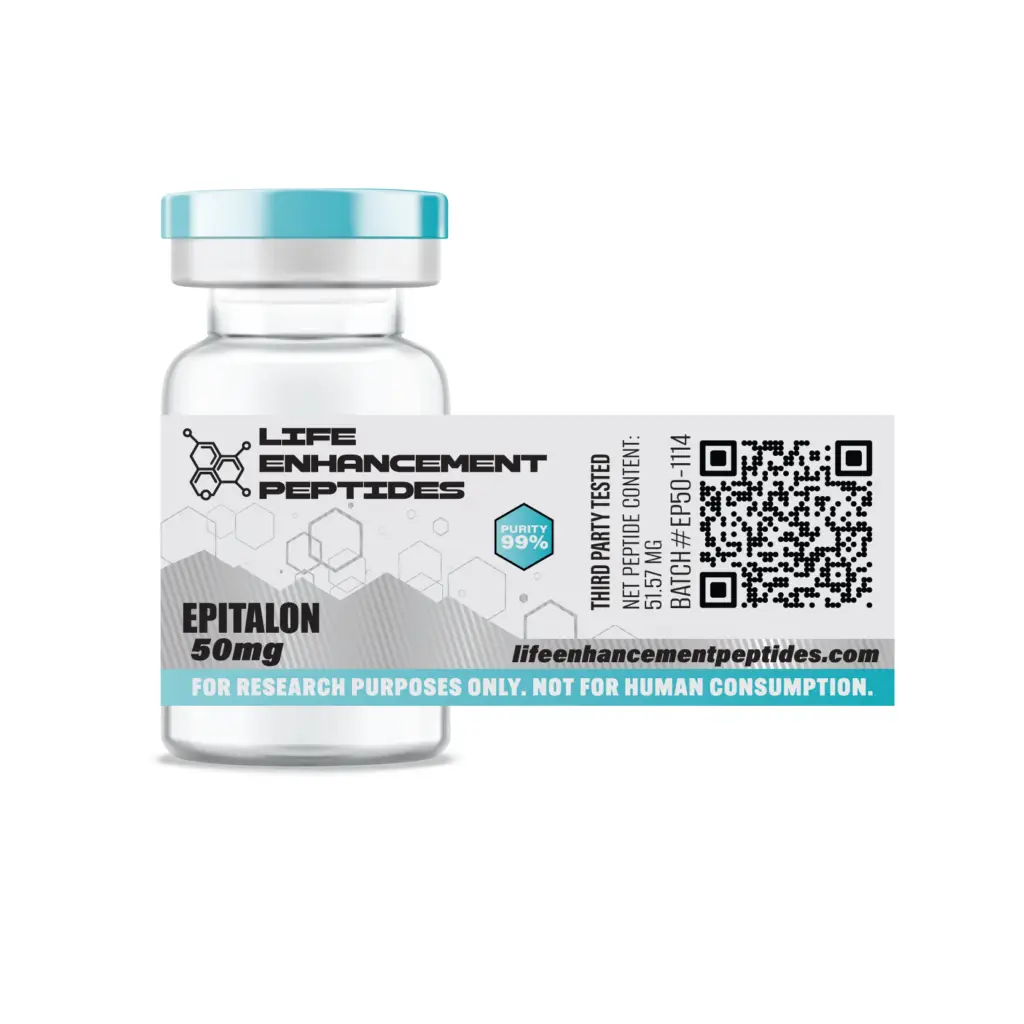
Epitalon — 50mg
$105
A synthetic tetrapeptide from the pineal gland that activates telomerase in human somatic cells, demonstrating measurable telomere lengthening in elderly human subjects — one of the few compounds with direct clinical evidence of telomere biology modulation.
 Immune & Longevity
Overview
Epitalon (Ala-Glu-Asp-Gly) is a synthetic tetrapeptide analog of Epithalamin, a polypeptide extract from bovine pineal gland. It was developed by the St. Petersburg Institute of Bioregulation and Gerontology under Vladimir Khavinson, whose team conducted the foundational research documenting both its molecular mechanisms and its effects in human aging populations. While many longevity compounds remain confined to in vitro or rodent models, Epitalon has been studied in elderly human subjects with measurable outcomes — an unusual distinction in this category.
The peptide's primary mechanism involves upregulation of TERT (telomerase reverse transcriptase), the catalytic subunit of telomerase, in human somatic cells that normally exhibit low or absent telomerase activity. Telomere shortening is a fundamental driver of cellular senescence and is strongly correlated with biological aging, making telomerase activation one of the most direct approaches to addressing this process. Studies in human subjects aged 60–80 demonstrated statistically significant telomere lengthening after Epitalon treatment — a finding that has generated continued scientific interest despite the small study sizes involved.
Beyond telomere biology, Epitalon modulates pineal gland function and melatonin secretion, influences circadian rhythm regulation, and has shown reductions in chromosomal aberrations in aging mouse populations. Separate lines of investigation have examined its effects on cancer incidence in long-term animal studies, where consistent reductions in spontaneous tumor formation have been reported. Its safety profile across multiple decades of research use in Russia is extensive, though large-scale Western RCTs remain an unmet need.
Mechanism of Action
Upregulates TERT expression to activate telomerase in somatic cells; modulates pineal gland activity and melatonin secretion; reduces chromosomal aberrations and promotes genomic stability in aging tissue.
Research Applications
Areas of peer-reviewed scientific inquiry where this compound has appeared.
- Telomere biology and cellular aging
- Lifespan extension research
- Cancer incidence in aging models
- Chromosomal stability and genomic integrity
- Circadian rhythm and melatonin regulation
Key Findings from the Literature
- 01Activates telomerase (TERT upregulation) in human somatic cells
- 02Significant telomere lengthening in human subjects aged 60–80 years
- 03Reduced chromosomal aberrations in aging mouse populations
- 04Long-term reductions in spontaneous tumor formation in animal models
- 05Extensive safety record in Russian clinical and gerontological research
Certificates of Analysis1
Independent third-party lab reports for this peptide. Each CoA can be verified against its accession number at the testing lab.
1 independent test by Janoshik Analytical
| Test | Result |
|---|---|
| Purity (HPLC) | 99.407% |
| Identity (MS) | Pass |
| Endotoxins (LAL) | Not Tested |
Lab: Janoshik Analytical
Accession: UY6M31CKZD3K
Reports are verifiable against the issuing lab using the accession or batch identifier above.
Related Peptides
Other compounds in the immune & longevity category.
 immune longevity
Thymosin Alpha-1
10mg
A 28-amino acid thymus-derived peptide approved in over 35 countries as Zadaxin, with substantial clinical evidence for viral infection treatment, cancer immunotherapy synergy, and vaccine response enhancement.
 immune longevity
SS-31
50mg
A mitochondria-targeted tetrapeptide that binds cardiolipin on the inner mitochondrial membrane, preserving electron transport chain function and reducing reactive oxygen species — approved in 2024 as elamipretide (Forzinity) for Barth syndrome.
 immune longevity
LL-37
5mg
The only human cathelicidin antimicrobial peptide — a 37-amino acid host defense molecule with broad-spectrum antimicrobial activity and substantial immunomodulatory effects relevant to wound healing, chronic infection, and inflammatory skin disease research.