
Immune & Longevity
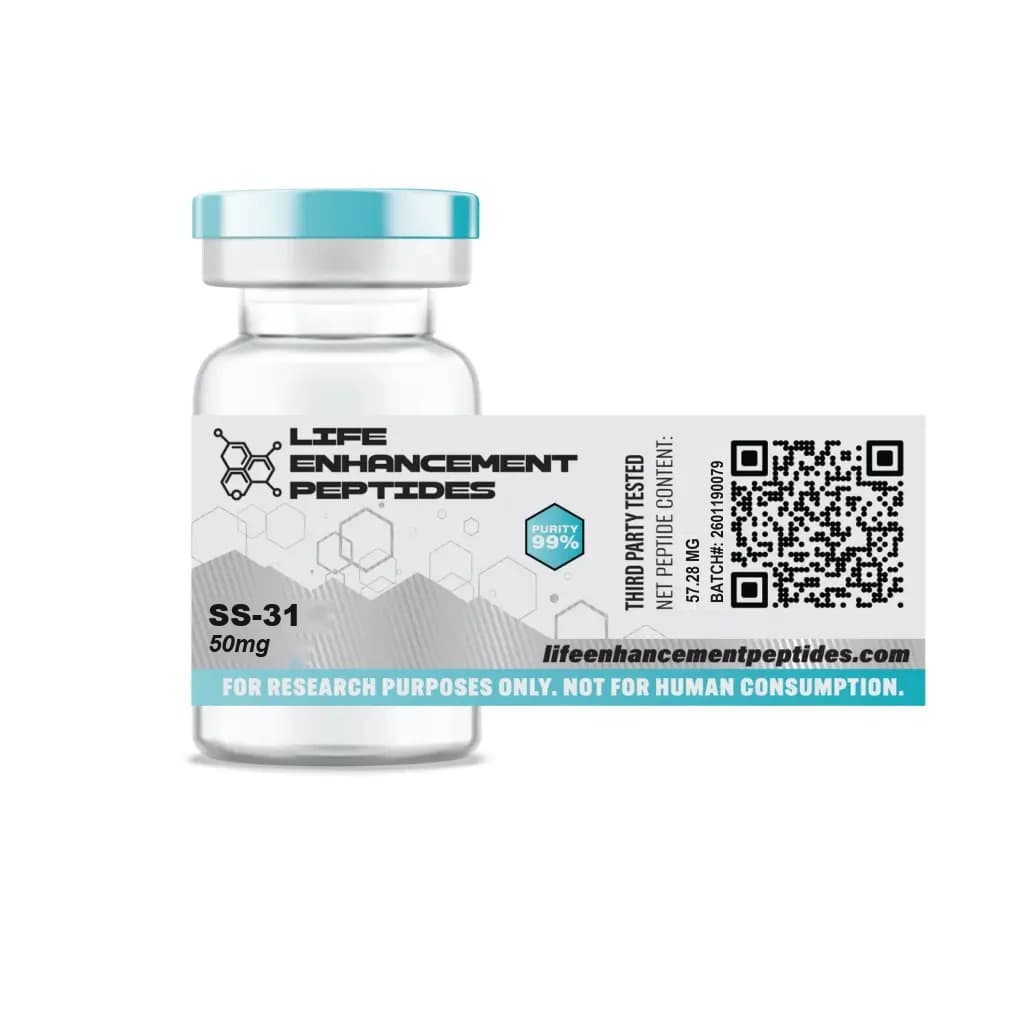
SS-31 — 50mg
$121
A mitochondria-targeted tetrapeptide that binds cardiolipin on the inner mitochondrial membrane, preserving electron transport chain function and reducing reactive oxygen species — approved in 2024 as elamipretide (Forzinity) for Barth syndrome.
 Immune & Longevity
Overview
SS-31 (also known as elamipretide, MTP-131, and Bendavia) is a cell-permeable tetrapeptide developed by Hazel Szeto at Cornell Medical College that selectively concentrates in mitochondria — reaching concentrations up to 1,000-fold higher in mitochondria than in cytoplasm. Its mechanism is distinct from conventional antioxidants: rather than scavenging free radicals after they form, SS-31 binds cardiolipin on the inner mitochondrial membrane and stabilizes the lipid environment required for proper electron transport chain (ETC) assembly and function. This structural preservation prevents the initial generation of reactive oxygen species rather than mopping them up downstream.
The compound's clinical trajectory under Stealth BioTherapeutics produced the first FDA approval of any mitochondria-targeted therapeutic: elamipretide was approved in 2024 as Forzinity for the treatment of Barth syndrome, a rare inherited cardiolipin-remodeling disorder. The approval followed a decade of clinical development spanning cardiovascular, ophthalmologic, and neuromuscular indications. Phase 3 trials in primary mitochondrial myopathy (MMPOWER-3), heart failure with preserved ejection fraction (HFpEF, EMBRACE), and dry age-related macular degeneration (ReCLAIM) produced mixed efficacy results but consistently validated the safety profile.
At the biological level, cardiolipin integrity is a fundamental determinant of mitochondrial function and is lost progressively with age — making SS-31 a natural candidate for aging research. Preclinical work has demonstrated restoration of mitochondrial ATP output in aged skeletal muscle, improved cardiac performance in models of diastolic dysfunction, and reduced oxidative damage across multiple tissues. The tetrapeptide's unusual mitochondrial tropism — driven by its alternating aromatic and basic residue sequence — has made it the prototype for a new class of compounds targeting subcellular organelles directly.
Mechanism of Action
Binds cardiolipin on the inner mitochondrial membrane to stabilize cristae architecture and preserve electron transport chain supercomplex assembly; reduces ROS generation at source rather than scavenging downstream.
Research Applications
Areas of peer-reviewed scientific inquiry where this compound has appeared.
- Primary mitochondrial myopathy and inherited mitochondrial disease
- Heart failure and cardiac diastolic dysfunction
- Age-related mitochondrial decline
- Ischemia-reperfusion injury
- Dry age-related macular degeneration
- Barth syndrome (FDA-approved indication)
Key Findings from the Literature
- 01FDA-approved as elamipretide (Forzinity) for Barth syndrome in 2024
- 02Concentrates 1,000-fold in mitochondria vs cytoplasm
- 03Cardiolipin-binding mechanism distinct from free-radical scavenging
- 04First mitochondria-targeted therapeutic to reach regulatory approval
- 05Restores ATP output in aged skeletal muscle in preclinical models
Certificates of Analysis1
Independent third-party lab reports for this peptide. Each CoA can be verified against its accession number at the testing lab.
1 independent test by Freedom Diagnostics Testing
| Test | Result |
|---|---|
| Purity (HPLC) | 99.902% |
| Identity (MS) | Pass |
| Endotoxins (LAL) | Pass |
Lab: Freedom Diagnostics Testing
Accession: 2601190079 / 2601190080
Reports are verifiable against the issuing lab using the accession or batch identifier above.
Related Peptides
Other compounds in the immune & longevity category.
 immune longevity
Epitalon
50mg
A synthetic tetrapeptide from the pineal gland that activates telomerase in human somatic cells, demonstrating measurable telomere lengthening in elderly human subjects — one of the few compounds with direct clinical evidence of telomere biology modulation.
 immune longevity
Thymosin Alpha-1
10mg
A 28-amino acid thymus-derived peptide approved in over 35 countries as Zadaxin, with substantial clinical evidence for viral infection treatment, cancer immunotherapy synergy, and vaccine response enhancement.
 immune longevity
LL-37
5mg
The only human cathelicidin antimicrobial peptide — a 37-amino acid host defense molecule with broad-spectrum antimicrobial activity and substantial immunomodulatory effects relevant to wound healing, chronic infection, and inflammatory skin disease research.